
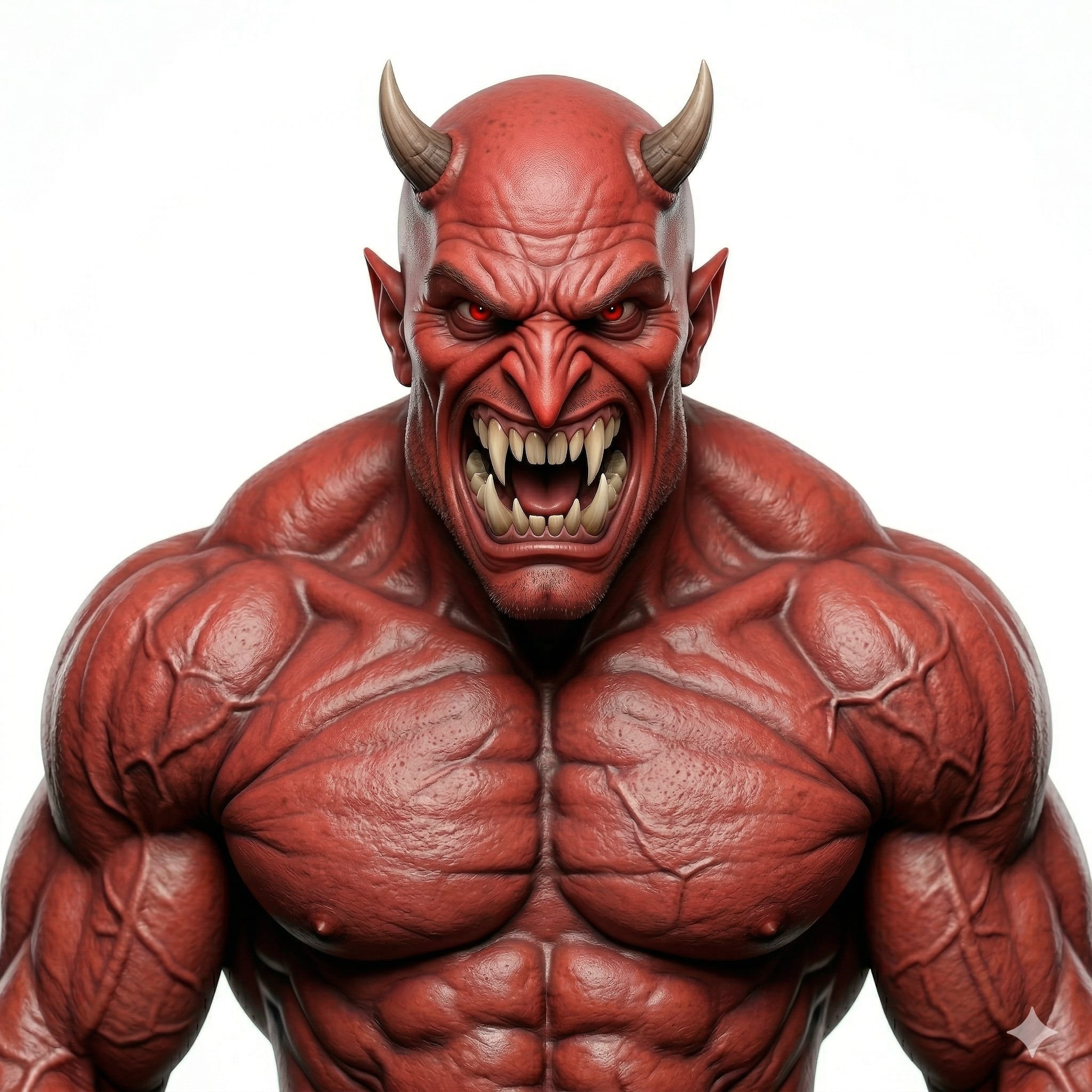
Ahriman (اهریمن)
Ahriman, the supreme spirit of evil, darkness, and disorder. Basically the universe’s long-running commitment to making sure nothing stays peaceful for more than five minutes.
He exists as the direct opposition to Ahura Mazda and, by extension, anything resembling civilization, stability, or good decision-making. Where order appears, he shows up like an unwanted software update that breaks everything you just fixed.
His preferred method is not direct destruction. That would be too honest. Instead, he specializes in influence. Corruption. Small choices that snowball into generational disasters.
Take  Zahak, for example. Ahriman starts simple: manipulate him into killing his father,
  Mardas. One tragic act, one clean break in morality. Then he escalates.
He returns disguised as a cook. Because evil apparently enjoys customer service roles. At the time, humans are vegetarian, so Ahriman introduces meat to Zahak’s diet over several days, building trust through culinary persuasion. Not conquest. Appetite engineering.
Zahak, impressed, offers him any reward. Ahriman asks for something oddly specific: to kiss his shoulders.
Zahak agrees. Because why not add “mysterious stranger physical contact clause” to your royal decisions.
The moment the kiss happens, Ahriman vanishes and two black snakes erupt from Zahak’s shoulders. Immediately. Permanently. Inescapably.
Zahak tries to remove them. They regenerate. Because consequences in this world do not believe in reversal.
Ahriman returns again, now as a physician, offering medical advice that is less “treatment” and more “ongoing horror management strategy.” He explains the snakes can only be calmed by feeding them two human brains daily. Otherwise, they’ll eat Zahak’s own. So now governance includes a recurring procurement problem involving human lives.
But Ahriman’s influence isn’t limited to one king.
He disrupts the early world of  Kiomars, sending his demon son,
  Div-e Siah, to kill
  Siamak. One act of violence, scaled into cosmic grief. The pattern repeats: creation, stability, intervention, collapse.
He commands entire armies of demons, including figures like Akvan Div, sending them against heroes such as Rostam. Always indirect. Always persistent. Never out of ideas, just out of restraint.
Then comes the exception that proves nothing stays under control for long.
 Tahmures, a king who actually bothers to push back, captures Ahriman, binds him with powerful spells, and transforms him into a horse. Not metaphorically. Literally. Then rides him around the world for 30 years as a public demonstration of dominance over evil.
Which is probably the closest this universe gets to “containment success.”
Eventually, Tahmures dies. And Ahriman escapes.
Because in this setting, evil doesn’t end. It just gets reassigned, rebranded, and sent back into circulation.
Children