
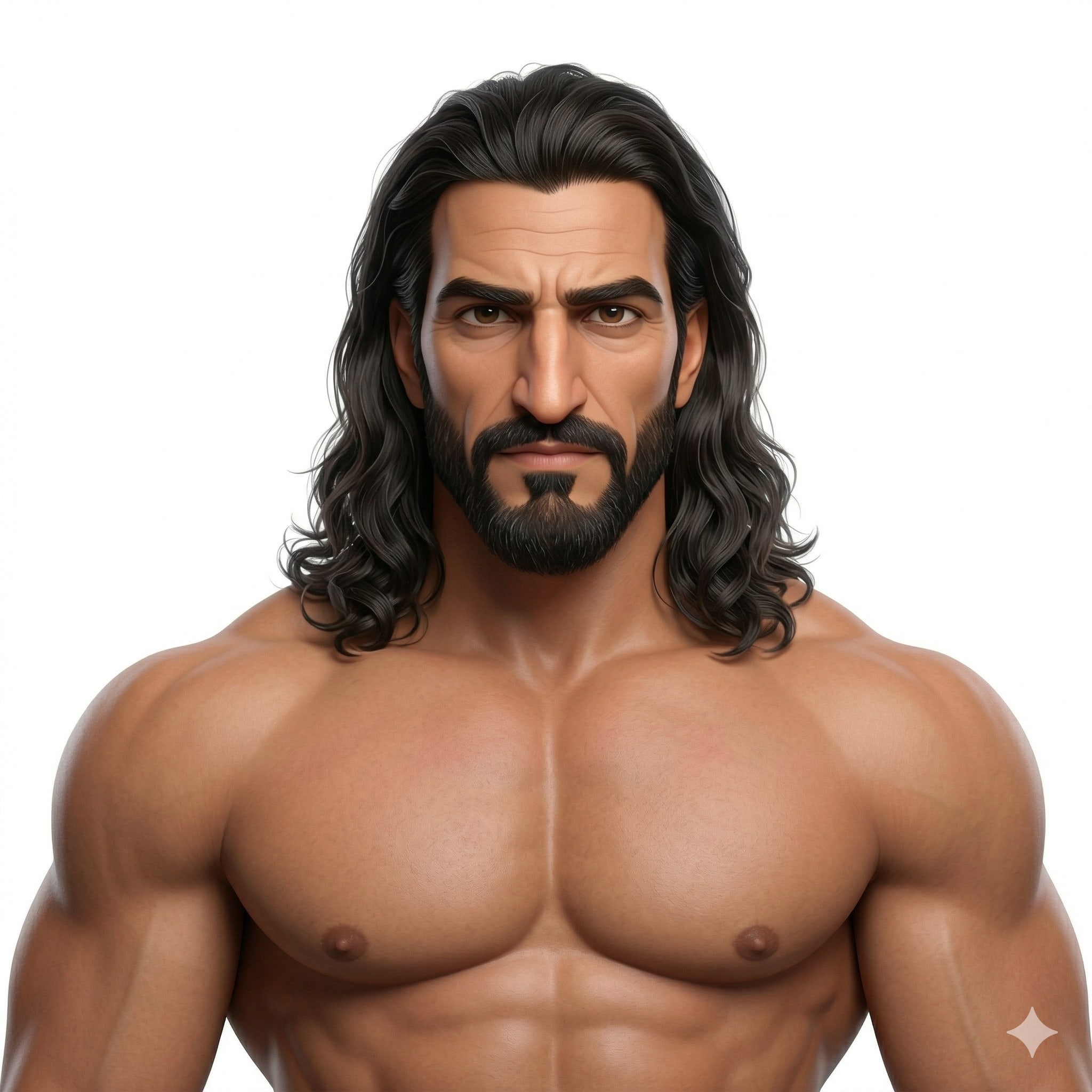
Tahmures (طهمورث)
Tahmures, third Pishdadian king after his father  Hushang, which already sets the tone: early civilization is just a relay race of people stumbling into breakthroughs while surrounded by supernatural chaos.
He earns the title “Devil-Binder,” which is less a job description and more a warning label for reality.
First major achievement: he defeats  Ahriman. Not in the polite “banish evil through moral clarity” sense, but in the extremely literal “capture cosmic evil and turn it into a ride” sense. He binds Ahriman, enslaves him, and at one point rides him like a horse.
Yes. The embodiment of chaos becomes transportation. For thirty years.
At this point, the universe briefly checks if this is allowed. It is not, but Tahmures is doing it anyway.
After conquering demons (divs), he does something even stranger: he spares some of them. Which, in this moral ecosystem, is either mercy or a very bad long-term investment.
It turns out to be both.
In gratitude for not being immediately erased, the surviving demons teach him something useful: writing. Thirty different scripts, including Roman, Persian, Sogdian, and Chinese. Civilization, accidentally outsourced to the very beings it was meant to suppress. It’s almost funny, in a structurally concerning way.
Then he continues upgrading human life like it’s a systems patch:
Shearing sheep.
Spinning wool.
Weaving clothes and carpets.
Training falcons for hunting.
Basically: turning survival into something that looks like society instead of improvisation.
So Tahmures becomes the rare figure in this world who doesn’t just fight chaos or survive it, but extracts infrastructure from it.
Eventually, he dies of natural causes after 30 years of rule.
No betrayal. No demon uprising. No poetic assassination.
Just the most unsettling event in this entire mythology: a powerful king ending normally.
He is succeeded by his son,  Jamshid, which, given the pattern so far, is less “continuation of stability” and more “next experiment in what happens when civilization gets too confident.”
Parents
Grandparents

Children