
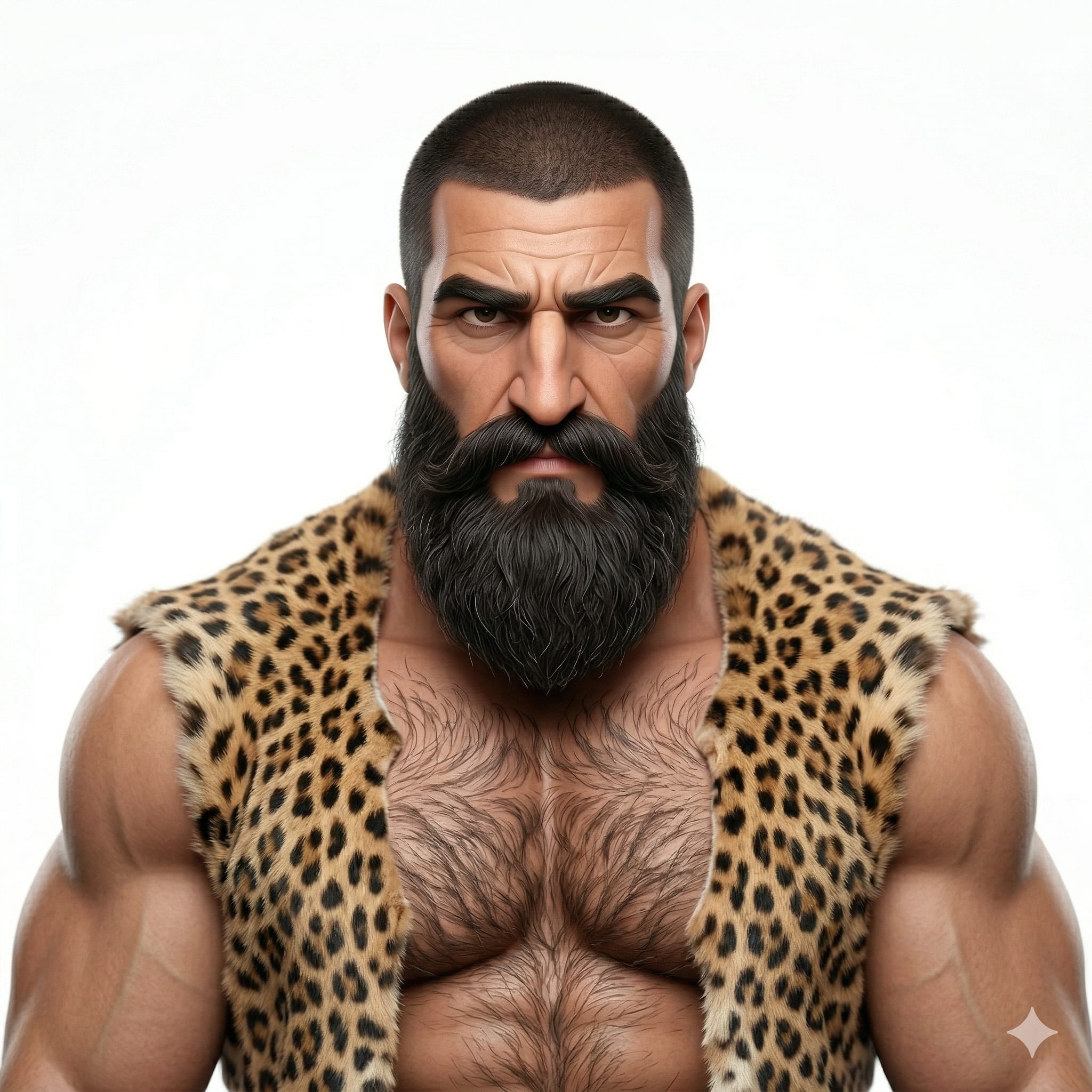
Kiomars (کیومرث)
Kiomars, the first king of the world. Back when “king” mostly meant “the only guy who decided rules were a good idea and everyone else went along with it because there was literally no alternative system yet.”
He lives in mountain caves, wearing leopard skins, because early civilization hasn’t quite figured out “wardrobe evolution” yet. Still, he somehow becomes the prototype for monarchy, law, justice, and even basic food preparation. Yes, he is the reason people stopped eating like confused animals and started calling it “cuisine.”
Everything in existence, humans and animals included, apparently just agrees to pay him respect. Not out of ideology. More like cosmic peer pressure.
Then he gets something called supernatural radiance from Ahura Mazda. A divine glow assigned exclusively to kings, which is either spiritual legitimacy or the universe’s way of saying “this guy matters, unfortunately.”
Then tragedy does what tragedy always does here: it arrives early and overcommits.
His son,  Siamak, dies.
Kiomars and his entire kingdom mourn for a full year. Humans. Animals. The whole ecosystem participates. Which is either profound unity or everyone just got tired of pretending they were fine.
After that, Kiomars rules for thirty years. Not chaos, not collapse, just early civilization trying to figure out how governance works without immediately falling apart.
Then he dies.
And the throne passes to his grandson,  Hushang, because continuity is the one thing this world insists on maintaining even while everything else is falling into myth, war, and grief.
So Kiomars ends up as what most “firsts” are in history: not just a beginning, but a prototype for everything that follows. Some of it works. Most of it becomes someone else’s problem later.
Children