
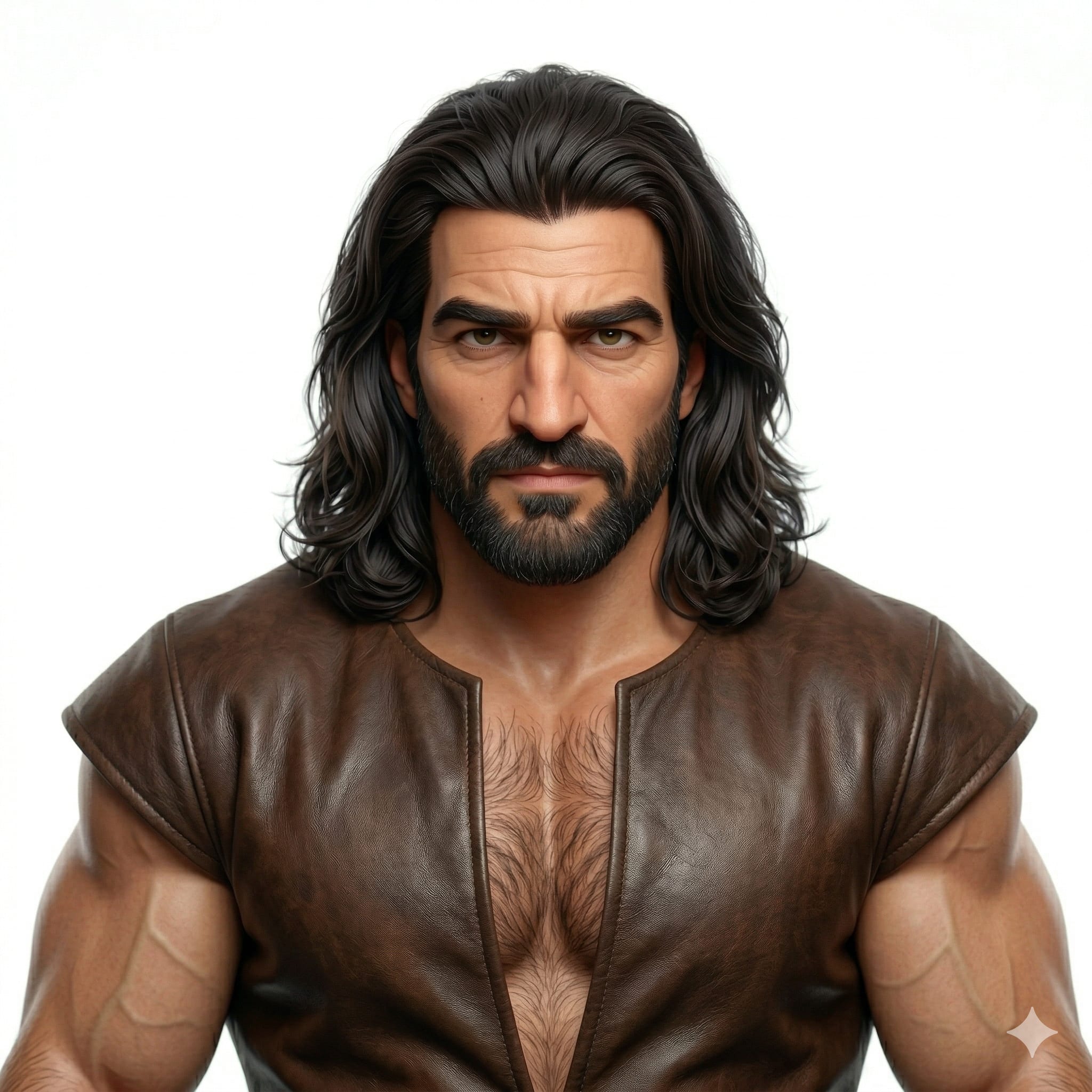
Sam (سام)
Sam, son of  Nariman and grandfather of
  Rostam, which basically makes him the original template for “national champion with complicated family decisions.”
He serves as Iran’s main defender across the reigns of  Fereydun, Manuchehr, and Nowzar. That’s multiple kings, multiple crises, and one consistent solution: send Sam. Reliable, effective, and probably very tired.
Then comes the personal test he does not handle well.
His son  Zal is born with white hair. Instead of thinking “genetics are weird,” Sam decides this is a demonic sign or a bad omen. So he abandons the infant on Mount Alborz.
Yes. Leaves him there.
Because nothing says “strong leader” like panicking at your own child’s appearance.
Enter  Simurgh, who steps in and raises Zal, because apparently mythical birds have a better track record for parenting than seasoned war heroes.
Time passes. Guilt shows up, late but persistent. Sam has a dream, realizes maybe abandoning your child on a mountain isn’t ideal, and goes looking for him. He finds Zal, now fully raised and functional, and brings him back, reinstating him as his heir.
So the relationship goes from abandonment to reunion, which in this story counts as emotional progress.
Then Zal falls in love with  Rudabeh, and Sam immediately finds a new reason to object. Her ancestry traces back to
  Zahak, which is, to be fair, not a great family reference. So Sam resists the marriage.
Eventually, the king consults astrologers, because no major decision is allowed without cosmic input. They predict that Zal and Rudabeh’s child will be the greatest hero in Persian history, protector of the Iranian crown.
That child is Rostam.
So Sam goes from rejecting the union to approving it based on a prophecy that basically says, “this will fix a lot of problems later.” Which, in fairness, it does. And also creates several new ones.
After a long life of service, Sam returns to his governate in Mazandaran. No dramatic fall. No betrayal waiting in the wings.
He dies of natural causes.
Which, in this entire narrative, feels almost suspiciously peaceful.
Sam ends up as a mix of strength and error: a man who could defend a nation without hesitation, but needed a dream and a mythical intervention to correct one very human mistake.
Turns out fighting enemies is easier than recognizing when you’ve become one.
Parents
Grandparents
Children