
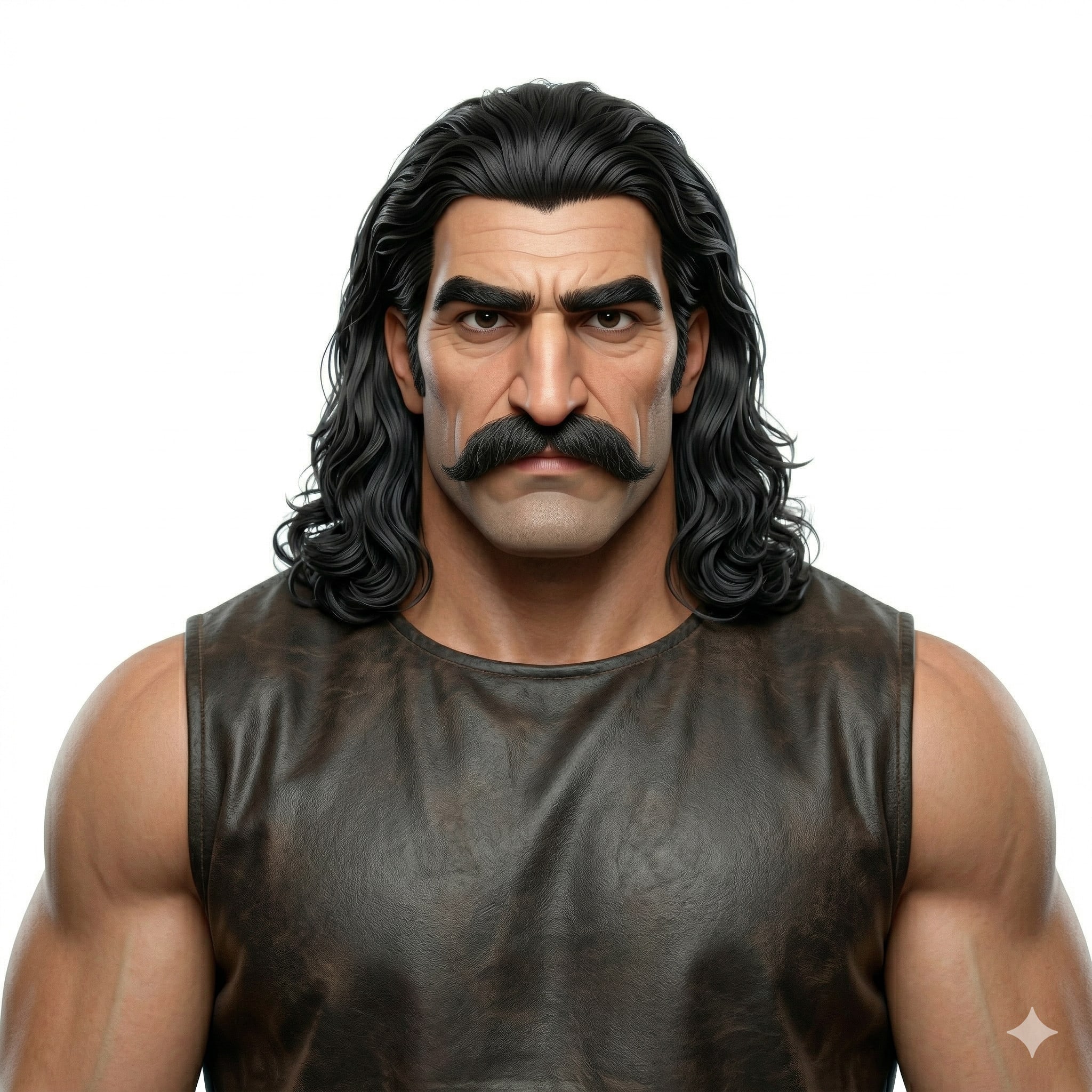
Esfandiyar (اسفندیار)
Esfandiyar, the “brazen-bodied” prince, which sounds cool until you realize it basically means “almost impossible to kill, with one very specific and extremely inconvenient exception.”
He’s blessed by Zartosht, making him invincible. Almost. His eyes are left vulnerable, because perfection is apparently not allowed in this universe without a built-in flaw. Zartosht also adds a lovely clause: anyone who sheds Esfandiyar’s blood is cursed. Bad omens, misery, and a guaranteed unpleasant afterlife. So killing him isn’t just difficult. It’s a long-term regret package.
His father,  Goshtasp, promises him the throne. All Esfandiyar has to do is rescue his sisters from Arjasp. Simple task, if your definition of “simple” includes fighting through chaos and completing a set of Seven Labors.
He does it. Survives everything. Wins. Proves himself.
And then gets nothing.
No throne. No peace. Just more orders.
Because Goshtasp decides the next step is sending his nearly invincible son to confront  Rostam. Specifically, to bring him back in chains. Which is less a mission and more a carefully engineered disaster.
Esfandiyar delivers the message. Rostam refuses. Not aggressively, not irrationally. He just declines to be dragged around in chains like a criminal, offering instead to come voluntarily. A reasonable compromise. Which, naturally, is rejected.
Esfandiyar insists. Rostam stands firm. And just like that, two of the greatest figures in the story are pushed into a fight neither of them actually needs.
They clash.
Rostam realizes something quickly: brute force won’t work. Esfandiyar is, inconveniently, built to survive this kind of encounter. So Rostam turns to  Simurgh, because when logic fails, you consult the ancient bird who fixes impossible problems.
She tells him exactly how this ends: a two-pronged tamarisk arrow, aimed at the eyes.
Rostam does it.
He kills Esfandiyar.
And instantly inherits the curse attached to that outcome, because of course he does. Victory, in this story, is just loss with better timing.
As Esfandiyar dies, he makes one final request: that Rostam take care of his son,  Bahman.
And Rostam agrees.
So the man who killed him becomes the mentor to his child. Which is either noble or deeply uncomfortable, depending on how much you think about it.
Esfandiyar’s life ends the way many of these lives do: shaped by prophecy, driven by duty, and ultimately destroyed not by enemies, but by the demands of his own father.
Invincible body. Fatal obedience.
Parents
Grandparents
Children